100% of profits fund C3 Kids Ministry Mandurah · Pick up at C3 Church Mandurah, Sundays from 10am

Category: Faith & Life

Scripture explained, and the ordinary business of living what you believe.

  • What “Proverbs 31 Woman” Actually Means

    What “Proverbs 31 Woman” Actually Means

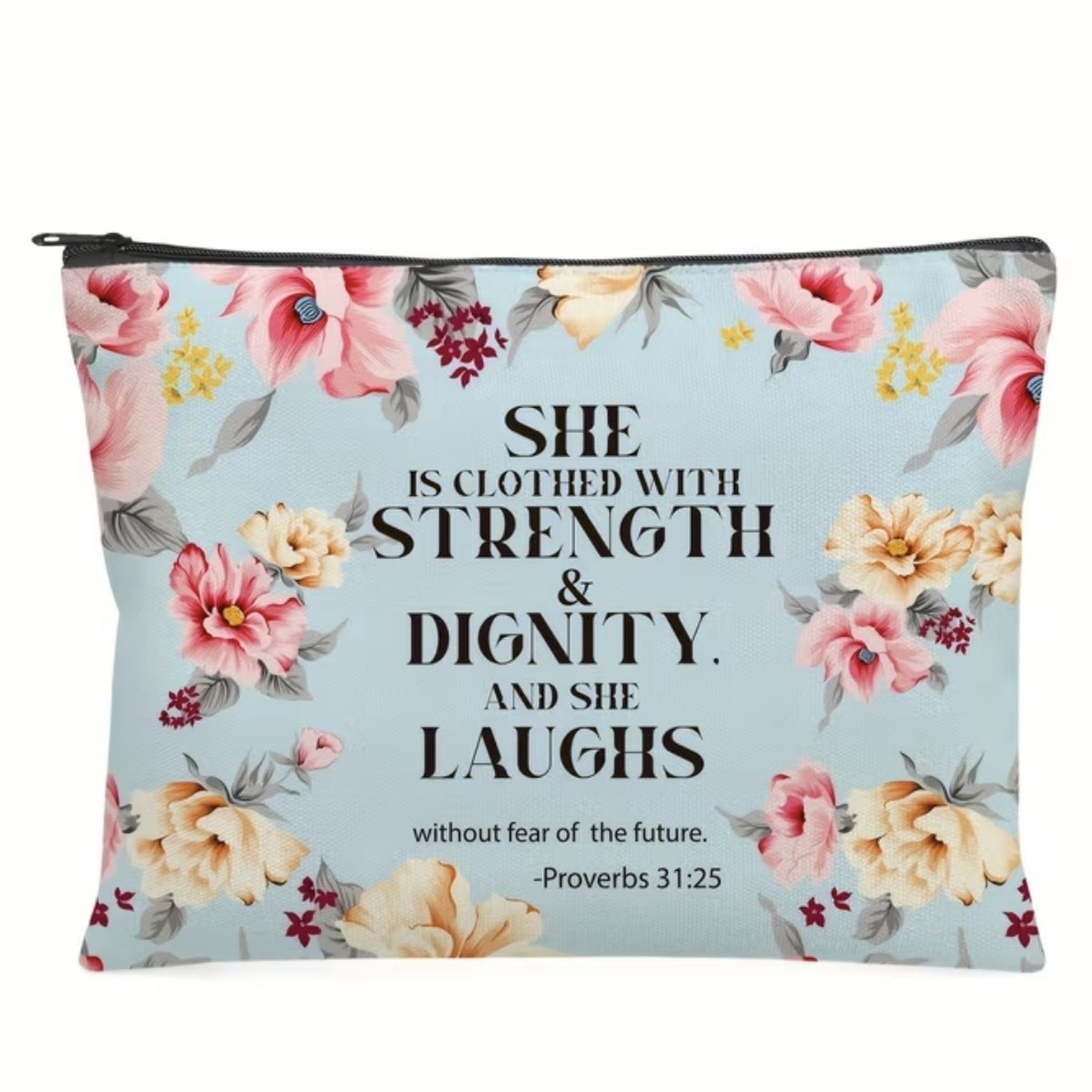
    Proverbs 31 is printed on more pouches, mugs and wall prints than any other chapter in the Bible. Somewhere along the way the phrase “Proverbs 31 woman” stopped being a description and became a standard, usually one the reader has already decided she has failed. The chapter itself is doing something quite different, and the first clue is in its shape rather than its content.

    It is a poem built on the alphabet

    The famous section runs from verse 10 to verse 31. That is twenty-two verses, and the Hebrew alphabet has twenty-two letters. Each verse begins with the next letter in order, from aleph to tav.

    This matters more than it sounds. An acrostic is a formal set piece, written to be memorised and recited. The point of running A to Z is completeness — a portrait assembled from every angle at once, deliberately covering the whole range. It is not a schedule.

    The word behind “virtuous” is military

    Verse 10 opens with the Hebrew eshet chayil. English Bibles give it as “virtuous woman”, “wife of noble character”, or “excellent wife”. The trouble is chayil. It appears a couple of hundred times in the Hebrew Bible, and the great majority of those are military or economic: troops, armies, force, the wealth and strength of a nation. A soldier of distinction is a gibbor chayil, a mighty man of valour.

    “Virtuous” pulls the word towards modesty and good behaviour. The Hebrew is closer to force. Woman of valour is the better rendering, and it changes the tone of everything that follows.

    One other woman in the Bible is given the same title. In Ruth 3:11, Boaz calls Ruth an eshet chayil — the identical phrase. At that moment Ruth is a widowed foreigner with no land, no husband and no income, surviving by collecting what the harvesters left behind. She owns no field, trades no linen and employs no servants, and is given the title anyway. Whatever the phrase means, it cannot mean a woman who has completed the checklist.

    What the Proverbs 31 woman actually does

    Read the twenty-two lines as a list of activity and it is mostly commerce. She assesses a field and buys it. She judges her goods profitable. She makes linen and sells it. She opens her hand to the poor. She speaks, and what comes out is called wisdom. Her husband’s contribution is to sit at the city gate, which was the courthouse and the council chamber, not a bench in the sun.

    One line is routinely misread. Her lamp does not go out at night, which gets quoted as proof that she never rests. In a household that bought its oil by the measure, a lamp left burning through the night meant there was oil to spare. It is a line about a household with margin, not a woman with insomnia.

    The frame is worth noticing too. The nine verses immediately before the poem are given as the words of King Lemuel’s mother, instructing her son — including the charge to speak up for the poor and the destitute. The woman of valour arrives directly after a mother teaching a king how to govern. She is the illustration of that lesson, not an advertisement for domestic productivity.

    It was written to be said out loud, to her

    In Jewish homes the passage has a fixed place. It is sung on Friday evening, as the Sabbath begins, by the husband, to his wife, at the table, in front of the children. For centuries its working use has been praise handed over, not a measure held up. The same words that read as an indictment on a fridge magnet read as a thank you when somebody says them to you.

    Verse 25, and a test before you give it

    Verse 25 is the one that ends up on pouches and cards: she is clothed with strength and dignity, and she laughs at the days to come. The clothing image is pointed. The poem has spent several verses on wool and linen and the cloth she makes for other people. Then it puts something on her that she did not make herself. And the thing she is not, in a chapter full of work, is afraid of what is coming.

    Which leads to a test worth applying before you give anybody a Proverbs 31 gift. Ask yourself whether she currently hears that chapter as praise or as a bar. For a woman who is tired, running a household with no margin, or quietly convinced she is behind, the verse arriving on its own can land as one more measurement.

    The fix costs nothing and takes a minute. Write one line on the card naming the specific thing you have actually watched her do — not that she should be strong, but the place where you saw her be. Then the verse is doing what it did at the Friday table: somebody saying it to her, about her.

    If you are after something with it on

    We carry a small range that suits this verse: bookmarks, pouches and keyrings in Scripture Gifts, and a few simple pieces in Jewellery. If you are not sure what to choose, our notes on how to choose a Christian gift work through it properly. Orders can be collected at C3 Church Mandurah, 1/9 Kulin Way, on Sundays from 10am, or posted anywhere in Australia.

    VerseVibe is run by volunteers and has no shareholders. Every dollar of profit goes to C3 Kids Ministry Mandurah. If you have a question about anything here, write to hello@versevibe.net.

  • The Full Armour of God, Explained

    The Full Armour of God, Explained

    The Armour of God turns up on a great many keyrings, mugs and wall prints, usually as a list of six things with a picture of a knight. Which is a shame, because the passage is far more interesting than the merchandise suggests, and the detail most people miss changes what it actually asks of you.

    Paul wrote Ephesians from prison. Roman custody at the time meant being chained by the wrist to a guard, in rotating shifts. When he reached for an image of readiness, he did not invent one. He described the man standing next to him.

    The belt of truth

    Modern readers hear “belt” and think of something decorative. The Roman version was structural. It gathered the tunic, took the weight of the sword, and anchored the lower armour. Without it, a soldier could stand, but he could not move without everything shifting.

    Truth is placed first for that reason. It is not one virtue among six. It is the thing that holds the rest in position.

    The breastplate of righteousness

    The breastplate covered the organs you cannot live without. Paul is specific about what protects them, and it is not being right about things. Righteousness here is closer to integrity — living in a way that matches what you say you believe.

    The practical version is unglamorous: the gap between your public and private self is the gap in your armour.

    Feet fitted with the gospel of peace

    Roman military sandals were studded with hobnails, which is to say they were built for grip rather than for marching. They let a soldier hold his ground on loose earth without sliding.

    The image is not about going somewhere. It is about not being moved.

    The shield of faith

    This is the piece most often misread, and the correction is worth the whole passage. The word Paul uses is not the small round buckler you see in films. It is the scutum — a door-sized curved shield, roughly a metre and a quarter tall, made of layered wood and leather that could be soaked in water so that incoming fire arrows went out on impact.

    The other thing about the scutum is that it was designed to interlock. Edge to edge with the shields either side of you, a line of them became a wall, and a unit could advance into arrow fire almost untouched. Alone, it was heavy and awkward and left you exposed at the sides.

    Faith, in the image Paul actually chose, is not a personal accessory. It is equipment that only works properly when it is locked to the faith of the people standing next to you.

    Which is a fairly direct argument against trying to do this on your own.

    The helmet of salvation

    The helmet protected the head, and Paul assigns it to salvation rather than to knowledge or willpower. The distinction matters: what guards your thinking is not how much you know, but what you are certain of about your standing.

    The sword of the Spirit

    The machaira was short — closer to a long dagger than a broadsword. It was a close-quarters weapon, used in the press of bodies where a longer blade had no room to swing.

    It is also the only offensive item in the list. Five pieces to hold your position, one to act with, and the one to act with is the word of God. Precise, close in, used at the moment of contact rather than swung about at a distance.

    The part everyone skips

    Verse 18, immediately after the list, tells you what to do while wearing all of it: pray. On all occasions, for all people. The armour is not a substitute for prayer. The armour is what you wear while praying.

    And there is one more absence worth noticing. There is no armour for the back. Roman equipment covered the front because the formation assumed you would not turn around. The protection worked in one direction only — which tells you something about what was expected of the person wearing it.

    Why it stays on keyrings

    Because it is genuinely useful. Six things to check when you feel unsteady: Am I being honest? Does my private life match my public one? Have I got my footing? Am I connected to other people? Do I know where I stand? Am I actually using what I have been given?

    That is a better daily examination than most, and it fits on a piece of metal you touch every time you pick up your keys. We keep Full Armour of God keyrings in stock for exactly that reason — they turn up in pockets, on school bags, and in the hands of people who needed the reminder that afternoon. For another passage that gets quoted far more often than it gets explained, see what “Proverbs 31 woman” actually means.

    Every dollar of profit from them funds C3 Kids Ministry in Mandurah, where a good number of children are learning this passage for the first time.